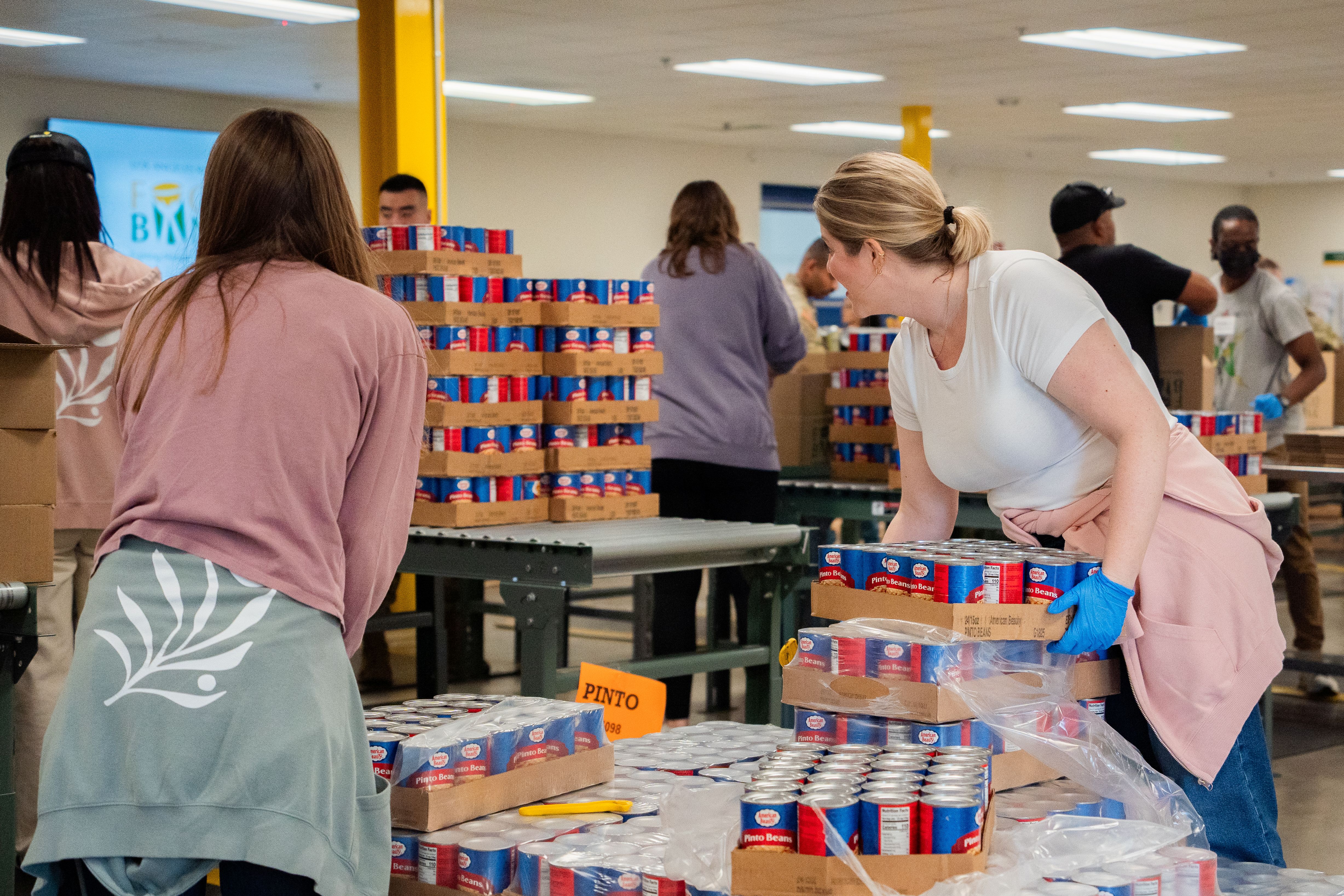
Will food insecurity get worse?
Local food banks shoulder greater responsibility while facing federal funding cuts
By Laury Li
Thirty-seven-year-old Terry Richardson pulled up to the Church on the Way a few blocks from his house in Van Nuys at noon on Nov. 20. He drove an old Toyota Camry with his neighbor quietly sitting in the passenger seat. They were among the hundreds who picked up food that day.
Currently unemployed with four children ranging from 17 to 21, Richardson is living on child support, plasma donation and on Supplemental Nutrition Assistance Program (SNAP), also known as CalFresh in California.

Terry Richardson arrives at Church on the Way to pick up his weekly groceries on Nov. 20. (Photo by Laury Li)

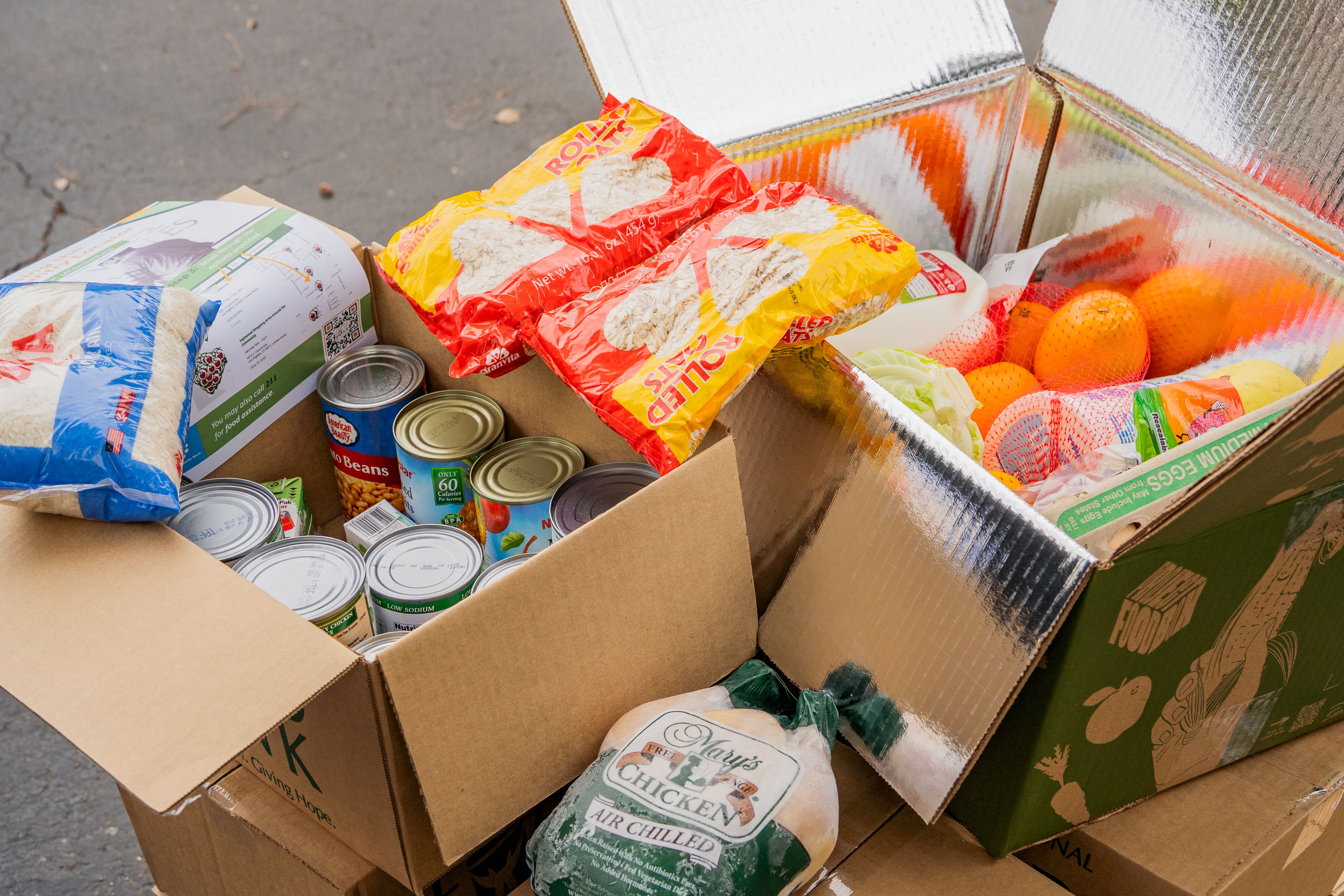
The Los Angeles Regional Food Bank’s volunteers put boxes of food into Richardson’s trunk. The amount of food can support a family of four for a week, according to Victoria Lasavath, marketing and communications manager at the LA Regional Food Bank. (Photo by Laury Li)
During the record-long 43-day government shutdown, the program that supported low-income American families expired nationwide on Nov. 1. He goes to food banks once a week as his $220 SNAP benefit that arrives on the first day of each month can’t support him and his four children through the second half of the month, in a state with a high cost of living like California. His neighbor, who would not give her name due to fear of retaliation from the administration, supports five children in her family often picks up food with Richardson on the same ride.
“It was hell,” said Richardson, referring to the SNAP cutoff. “I hope the food pantries and places like this could be running and help people out, so they can make it.”
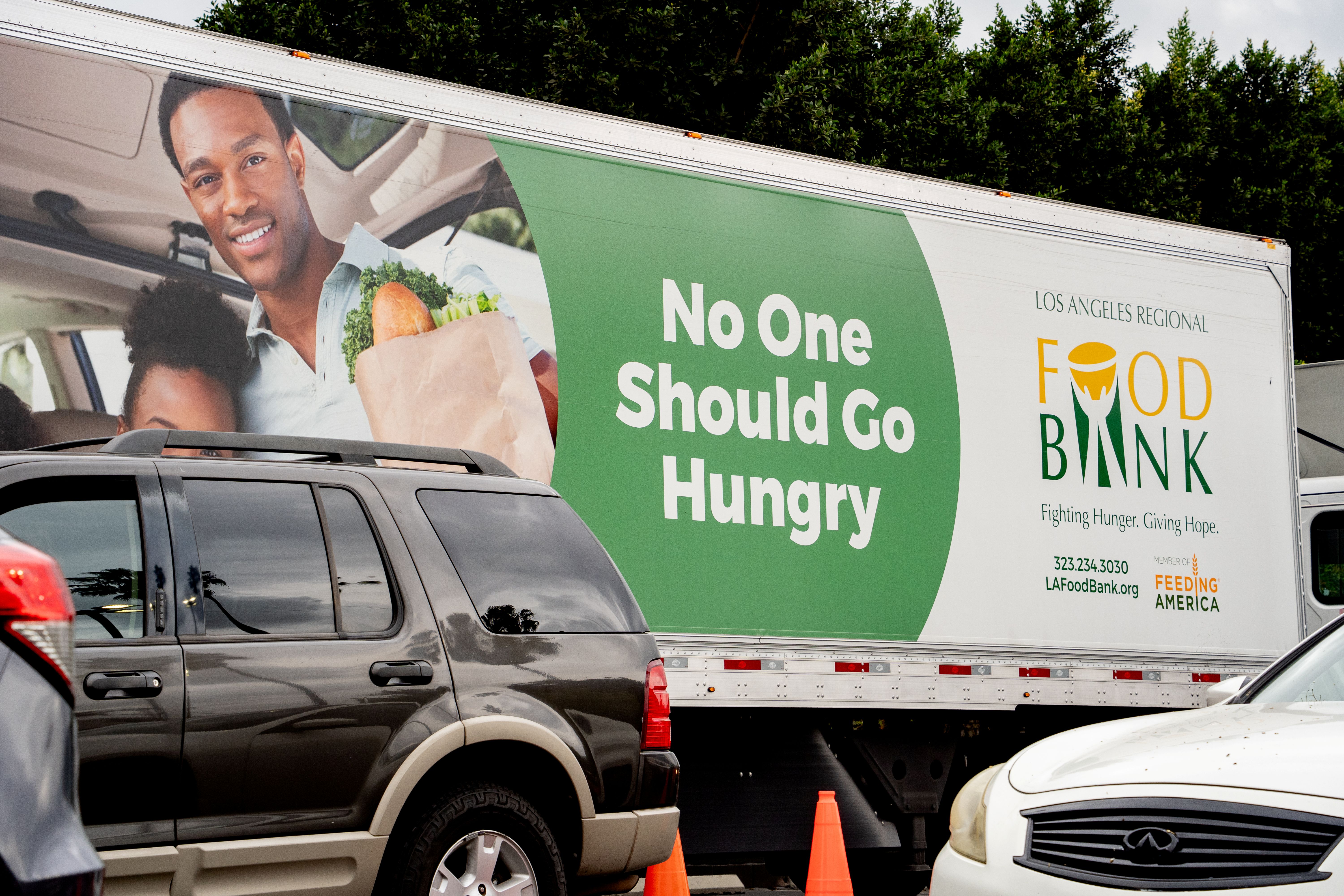
Food programs are facing slashed federal funding, thanks to President Donald Trump’s major shifts in domestic policy, which tore away what had been a lifeline for millions when he signed his “One Big Beautiful Bill Act” in July.
The bill aims to cut around $187 billion over the next decade — the equivalent of providing meals for 1.6 million American families of four for a decade, each spending $1,000 on food per month.
Since last summer, 94 million pounds of food aid deliveries have been canceled due to the administration’s funding cuts, according to ProPublica.
Many people who receive delayed December SNAP payments will begin to lose benefits as early as May 2026.
Stricter work requirements will be placed on SNAP recipients, putting some 2.4 million low-income individuals at risk of losing current benefits, including Richardson.
Concerns about food insecurity loom over vulnerable populations and those offering assistance. With less federal support, food banks are caught in the middle, facing an unknown future with greater need and tighter resources.
Beneficiaries lose support
The “One Big Beautiful Bill” includes updated work requirements for able-bodied adults without dependents receiving SNAP. An able-bodied adult without dependent children will need to prove that they are working over 80 hours per month, receiving training or education. SNAP recipients can receive only three full months of benefits within three years if they do not meet the requirements.
Changes to work requirements now apply to a greater population and exclude many from previous exemption. Before this summer, recipients under 55 years old without children under 18 were subject to the three-month limit.
From 2008 to 2025, California has also received statewide waivers to allow more people to receive CalFresh funds, including part-time students, the unemployed population and people 60 or older. The previous waiver only required states to have an unemployment rate 20% higher than the national average, which allowed 5.5 million people to receive CalFresh benefits this year.
Under the new rules, California will lose its statewide waiver and must comply with the nationwide law, which requires a waiver to be based on over a 10% unemployment rate. The new federal law puts able-bodied adults below 64 years old, without dependent children under 14 years old, at risk of losing SNAP benefits if they work or study less than 20 hours per week. Based on estimates by the California Association of Food Banks, the number goes up to over 428,000 Californians.
Though currently exempt from the work requirement, veterans, the unhoused population, and recipients aged 55 to 64 or with children over 14 will need to work or study 80 hours a month to receive SNAP. Currently, only Colusa, Imperial and Tulare meet area waivers with unemployment more than 10%. Yet the three counties make up only 3% of all CalFresh recipients.
“The jobs ain’t there,” Richardson explained when talking about his job-hunting experience. “When you go into all these apartments and all these stores, you don’t see a Black person working there. That’s my chances of getting hired.” According to the Public Policy Institute of California and the California Association of Food Banks, African Americans are among the groups facing the highest unemployment rate and food insecurity.
Gladis Herrera, 48, does community outreach for the Salvadoran American Leadership and Educational Fund. The organization provides resources like citizenship test classes and essential products. On a Thursday morning, she went a block away from her job to pick up a bag of food for her neighbor from Central City Neighborhood Partners. Though she received her CalFresh qualification letter, her EBT card never arrived in the mail.
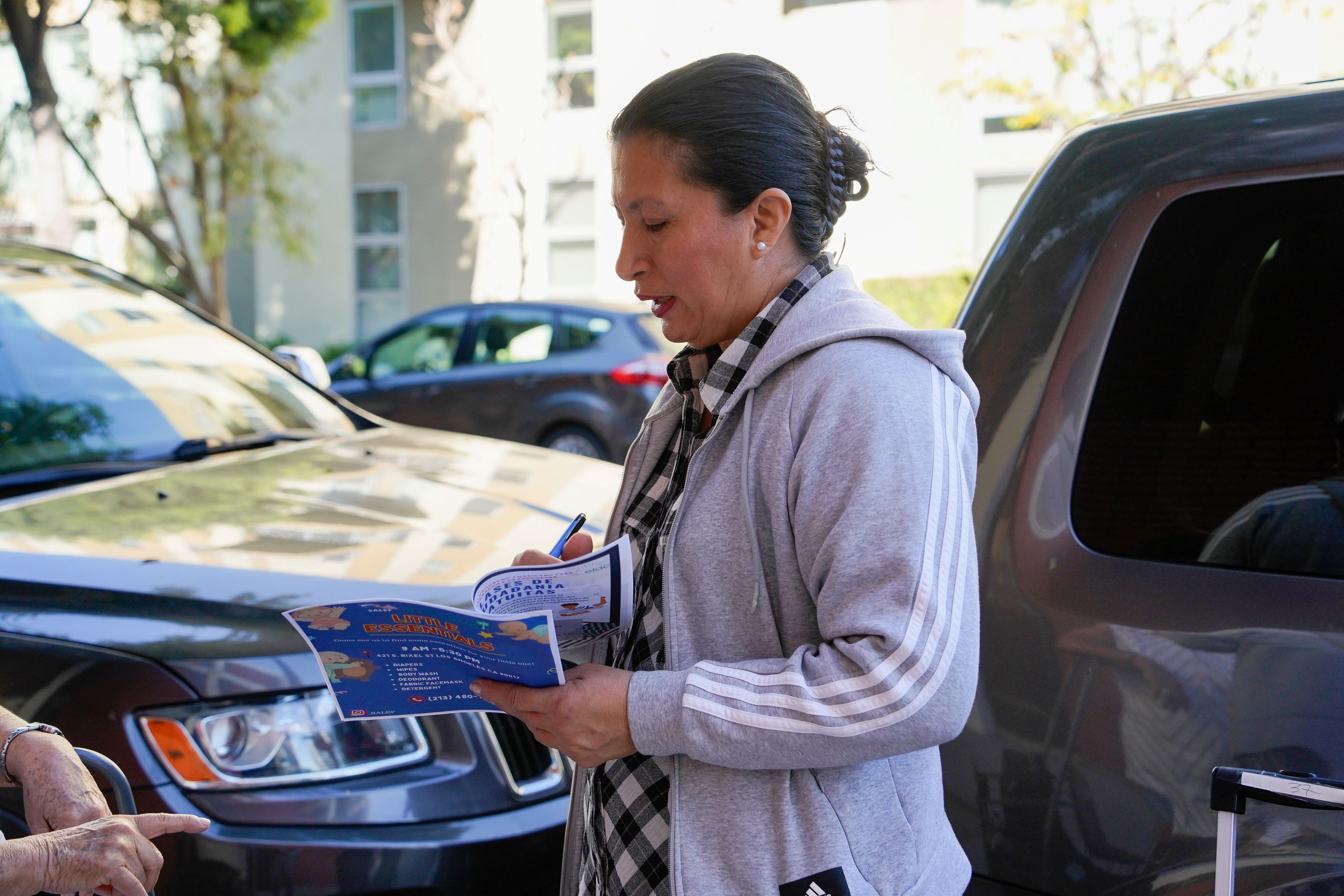
Gladis Herrera, of the Salvadoran American Leadership and Educational Fund, hands out flyers detailing the resources her organization provides to community members picking up food at Central City Neighborhood Partners on Dec 11. (Photo by Laury Li)
“The children like beef, but now we cannot give too much beef to the children,” Herrera said. Her CalFresh benefit will help out with the rising grocery prices, if it ever arrives.
Currently, Herrera works 30 hours per week, leaving her with spare time to care for her kids. With two dependent children at home, turning 14 and 16 next year. She is worried that the changing policies will disqualify her from receiving the benefits in the future.
“I feel very bad,” she said. “Because if I don't have work, I cannot run over there for help because I don't qualify for the age for my children.”
Food banks shoulder additional burden
Central City Neighborhood Partners provides food on Mondays and Thursdays. Major sources of the two-day distribution are from the LA Regional Food Bank and the Sam Simon Foundation. Serving residents from Pico-Union to Koreatown, the center has been hosting its food security program since 2016.
Associate Executive Director of the center, Diana Alfaro, said the organization has been preparing portions for 1,000 people each Thursday since the pandemic, and demand hasn’t decreased. She finds it hard to predict what the future holds, as the effects of federal funding cuts haven’t fully played out.
In California, it will cost $3 billion to close the meal gap — additional money required to purchase a healthy diet — according to Feeding America. While nonprofit food programs helped to close the gap this fall, it will soon grow larger as the state faces declining SNAP funding.
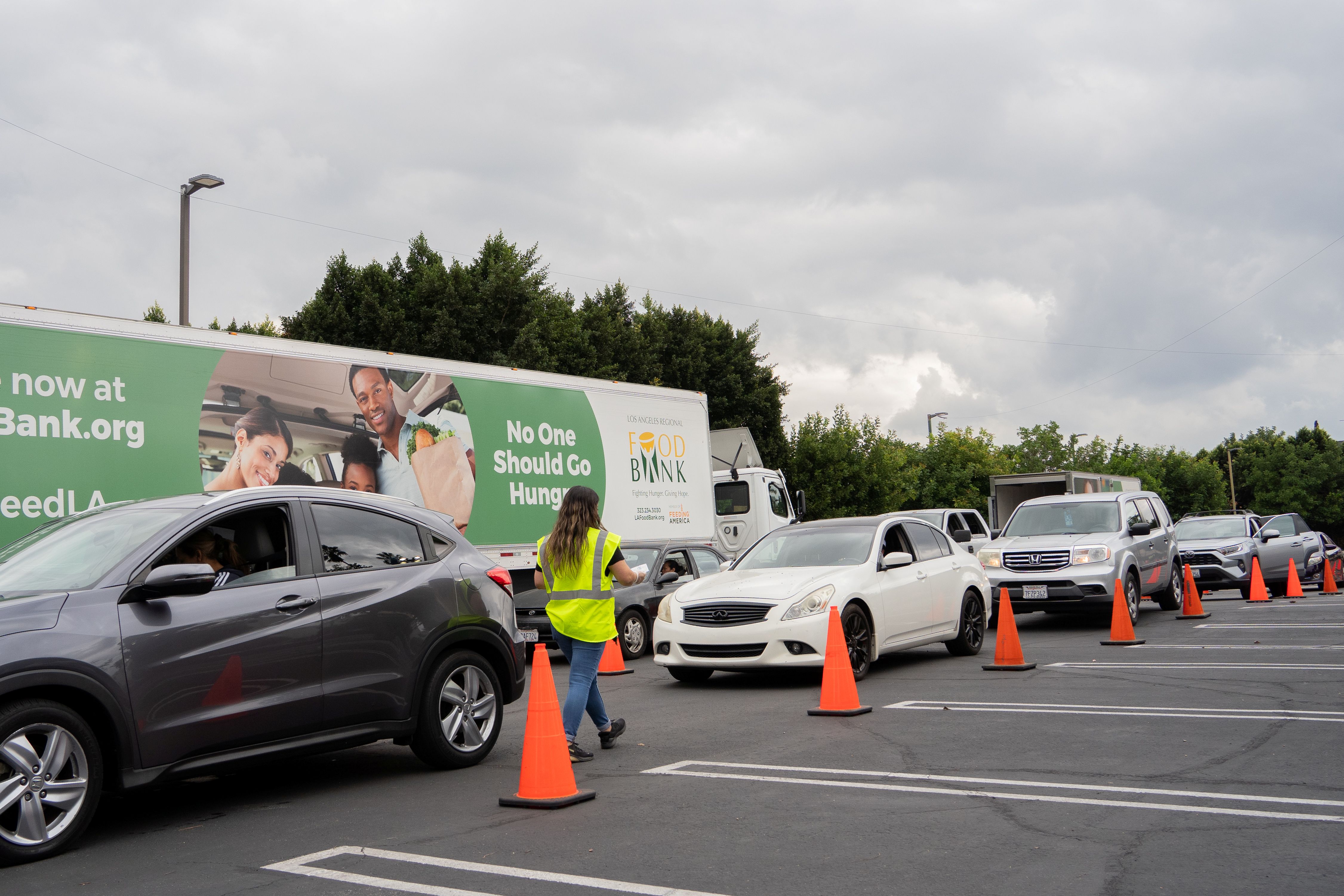
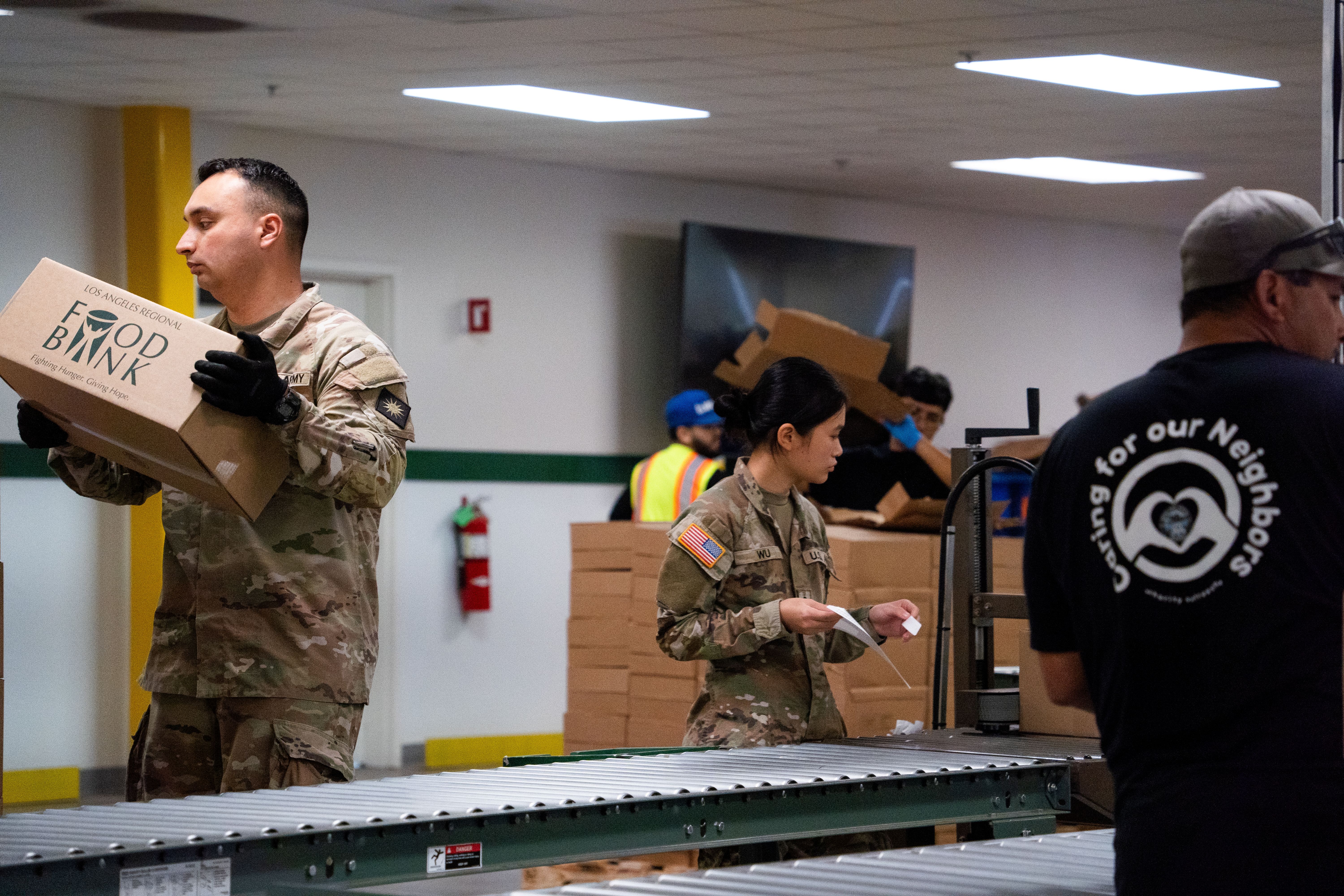
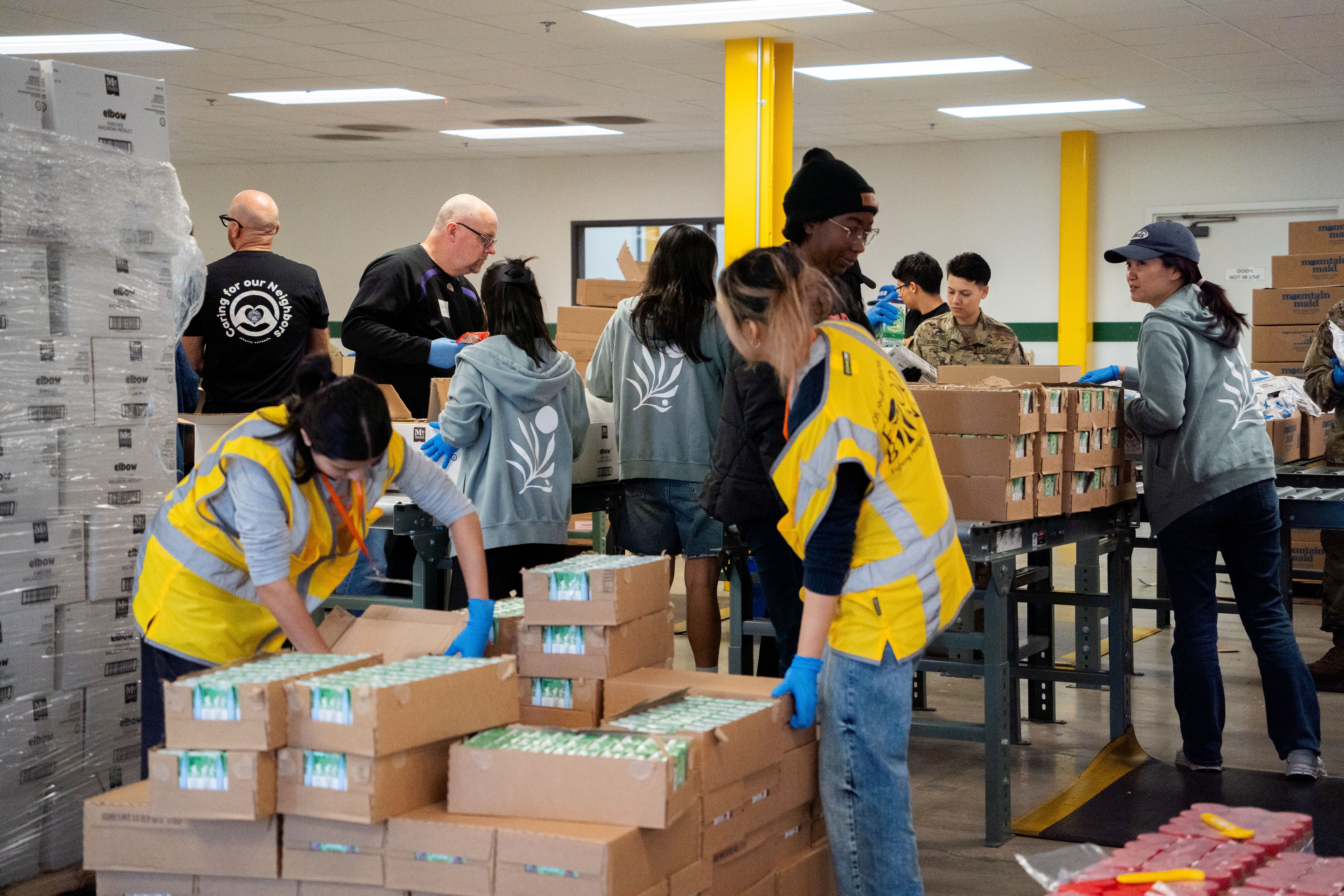
Unlike its usual distribution to partner agencies such as community-based charitable organizations, the Los Angeles Regional Food Bank, which has over 600 agency partners and 900 distribution points across the county, set up a direct distribution site in the church’s parking lot on November 20. Many volunteers said they signed up because they witnessed a crucial time of need and want to contribute to the community.
Twenty-nine-year-old Angel Reyse is the volunteer engagement coordinator at LA Regional Food Bank. Upon taking the position, he wants to be more involved with and help out the community. Reyes said, on that day, the site has fewer than 40 volunteers, expecting 2,000 people to show up. And sometimes, the food prepared can’t feed everybody.
“It’s odd for me to have to cut people off, like ‘We're out of food,’’ he recalled a food distribution during the government shutdown. “And people have been waiting in line for two hours.”
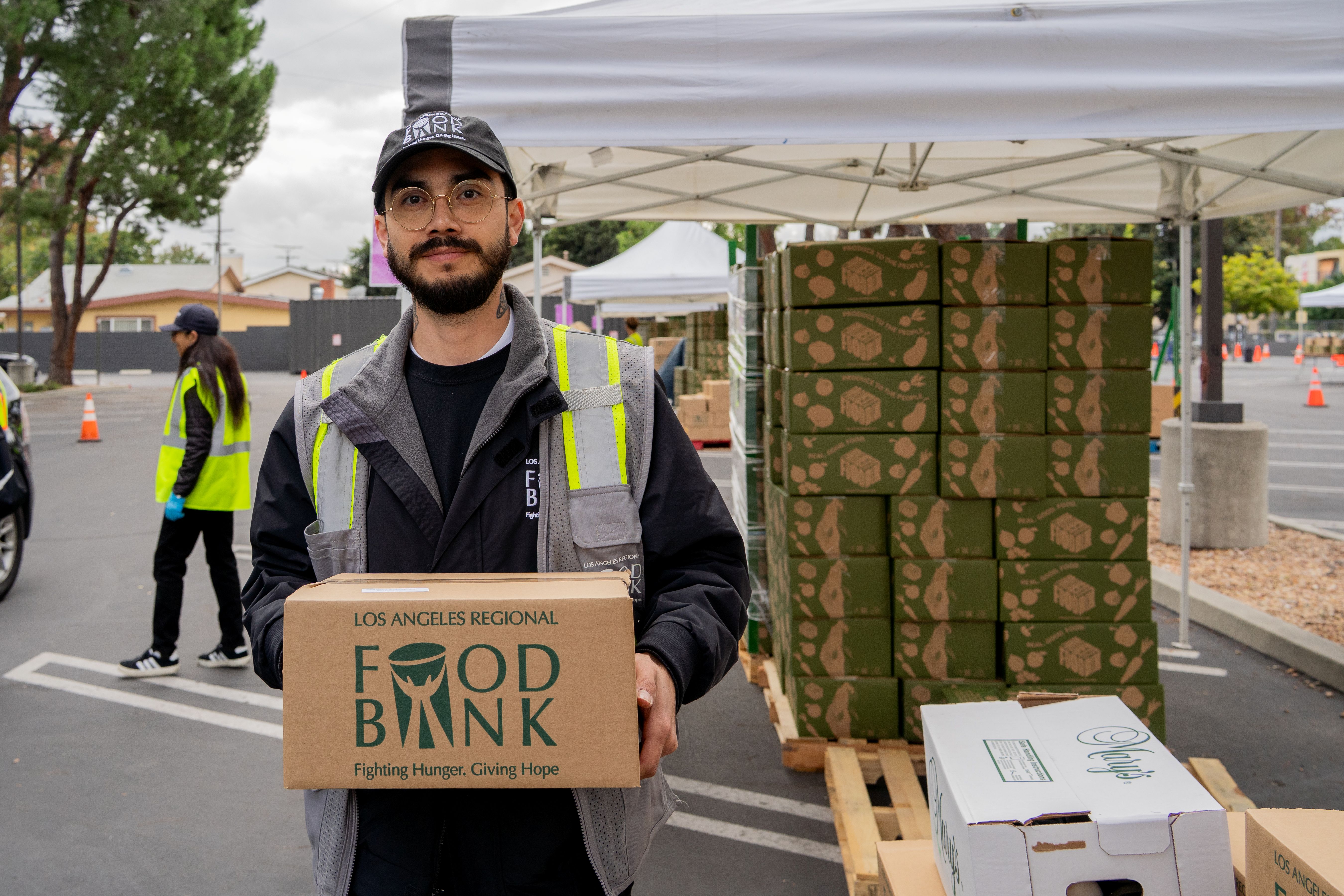
Angel Reyse, volunteer engagement coordinator at the LA Regional Food Bank, recalls the days when so many people showed up that food ran out. (Photo by Laury Li)
Though the SNAP benefits were reinstated, food banks are facing additional financial challenges. The organization’s government affairs and research director, Chris Carter, said that states now need to cover an additional quarter of administrative costs. According to its financial report, almost half of the LA Regional Food Bank’s food is from government programs.
“We haven't heard from CDSS for certain when those [new work requirements will be implemented], and I believe they're also waiting to hear more guidance from USDA,” Carter said. With many factors still unknown, the only clear prediction is that pressure will increase.
“The rule of thumb really is that that Feeding America formula of one meal for every nine provided by SNAP,” He continues. “So it really will be a significant challenge for the charitable food network to replace what is provided through the CalFresh program.”
From 2022 to 2025, the Biden administration granted billions in emergency food assistance funding to support feeding organizations like food banks. “For a while, the SNAP benefits were higher to accommodate, to make some more progress for the pandemic,” said David May, senior director of marketing and communications at the LA Regional Food Bank. Yet that was soon taken away, as the Trump administration cut $500 million last March.
The November data on how the SNAP funding cliff affects the organization is not available yet, May said, but he could sense the surge in demand.
“If you go all the way back to before the pandemic, we were reaching about 300,000 people,” he said, comparing the increasing demand during the government shutdown to six years ago. “Now we're at about 1.2 million (each month).”

“We are concerned that there will be a lot of additional pressure on the charitable food system,” Carter said, “As a result of more individuals and households losing CalFresh benefits, as a result of the work requirements.”
Community organizations that are less reliant on government funding are also sensing the ripple effect. Linda Pianigiani is the interim director of development at Hollywood Food Coalition , an organization that distributes rescued food to local nonprofits and serves community dinners.
Pianigiani explained that, with limited federal funding, the entire ecosystem is challenged. “There’s only so much funding available that private philanthropy puts out there, unless (philanthropies) choose to increase the funding,” she said. “But there are more organizations now that are going for the same amount of funding. That implicitly becomes more competitive.”
And Pianigiani sees its impact on both the system and the community. “The shock to the system was a real thing that is probably going to continue to impact people for months to come,” she adds.
Though facing rising challenges, both Pianigiani and May expressed confidence in sourcing more food for the community. The Hollywood Food Coalition hopes to generate revenue through creative ways to navigate uncertainty. May points to additional funding from the state and county to sustain food purchases.
But the fundamental math remains unchanged: stricter work requirements will push hundreds of thousands of Californians off CalFresh, and food banks are taking on greater responsibility as the social safety net contracts. How much charitable organizations can shoulder what federal programs once provided — and for how long — remains to be seen.