
Hope on Hold
Millions of undocumented immigrants are in limbo as it takes an emotional and legal toll on families seeking to stay together.
By Brianna Rieux
After more than 6 years of navigating the complex immigration legal system, enduring the frustrating application delays and facing the possibility of separation, there was finally a glimmer of hope for a family of 4 in Tulsa, Oklahoma.
Ellie and Brandon Diaz are trying to keep their family intact while they have been immersed in an extended immigration limbo.
When they learned about a process that might allow them to stay together called the Keeping Families Together Parole in Place program which would allow them to remain in the U.S. without the fear of deportation while they seek to adjust their immigration status, they felt a sense of hope for their future, “It was gonna just change our lives,” said Ellie.
For Ellie, a U.S. citizen, and Brandon, who came to the U.S. as a child, the emotional distress of living in fear of separation and navigating through the immigration system for years has been unbearable. They have faced many challenges including spending thousands of dollars in legal fees, falling victim to a scam by a lawyer who made false promises and enduring delays in application processes. All while grappling with the fear of separation. Yet they continue to seek stability and safety for their family as discussions on immigration reform continue.
The Diaz family is just one of at least 16.7 million mixed-status families in the U.S. living at a standstill with their immigration status, among them, 550,000 are estimated to be eligible for the prole in place program. This program is helpful for those who enter the U.S. without proper documentation to remain in the country while they work on adjusting their status, according to the American Immigration Council.
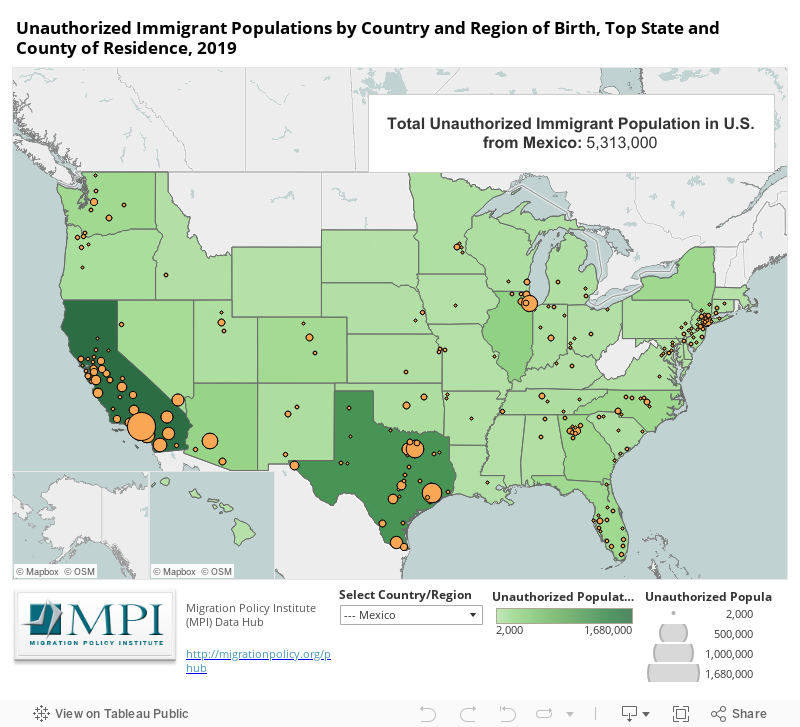
A map created by the Migration Policy Institute offers a visual representation of where undocumented individuals reside across the United States. This map highlights key demographics, including country and region of origin, as well as the top states and counties of residence.
Despite all of these challenges, families are encouraged to keep moving forward, Managing Attorney Saman Gonzalez emphasizes the importance of perseverance.
“When it comes to the money and the stress and the frustration, this is all just part of the process. It kind of is what it is right now,” said Gonzalez. “When we get to this point, we're going to be able to move up to the next step to this point, and there is light at the end of the tunnel. We just need to keep pushing forward,” said Gonzalez.
For the Diaz family, these challenges are a daily reality. As they deal with the stress of uncertainty, their story illustrates the ongoing struggle for stability in mixed-status families.
Brandon and his family had moved to Broken Arrow, Oklahoma from Mexico City when he was just 11 years old in search of a better opportunities and employment that offered better pay. They followed his father’s sister and her husband who had already settled in a nearby town. Shortly after Brandon and his father’s arrival, his mother and siblings joined them.
Brandon’s father began to install carpets and floors and, over time, business was good. The family business thrived, Brandon recalls. “There's really no picking what you get to do when you come here,” said Brandon. “It was more like that was the first thing available, and that's what he kind of has been doing ever since.”

As a kid, Brandon started helping his dad in the business by just picking up trash. As he got older, he quickly learned the ropes and picked up the skills that would eventually help him contribute to the family business. After high school, he started working full-time alongside his father.
They started working towards securing Brandon’s permanent resident status before they were married, eagerly looking forward to a future together and the possibility of starting a family. However, they quickly realized how complicated their mixed-status situation would become. Ellie describes it as one of the most, “emotionally, mentally, and financially draining” challenges they have ever faced.
They met with an immigration lawyer in 2018 to discuss the application that helps people who are in the U.S. without legal status but have immediate family members who are American citizens, known as an I-601A. This waiver is a way for certain immigrants seeking permanent resident status to leave the country and apply for a green card without becoming blocked from re-entering the U.S. This lowers the risk of families being separated for a longer time.
The process was far more complicated and expensive than they expected. Processing times for the I-601A increased by 590% from 2017 to 2022 as of January 2024 it takes about 43.5 months for applications to be processed. While the processing times continue to increase so do the number of pending applications. This is partially due to The U.S. Citizenship and Immigration Services (USCIS) staffing shortages during the COVID-19 pandemic and changes in USCIS policies.
At the time the Diaz family started their paperwork, processing times were only 4.5 months. However, by the time they were finally able to submit their paperwork a little over a year ago, those times had multiplied to over 3 years. Since filing, they have not received any updates and don’t expect to any time soon.


